



Tignes vs Val d'Isère
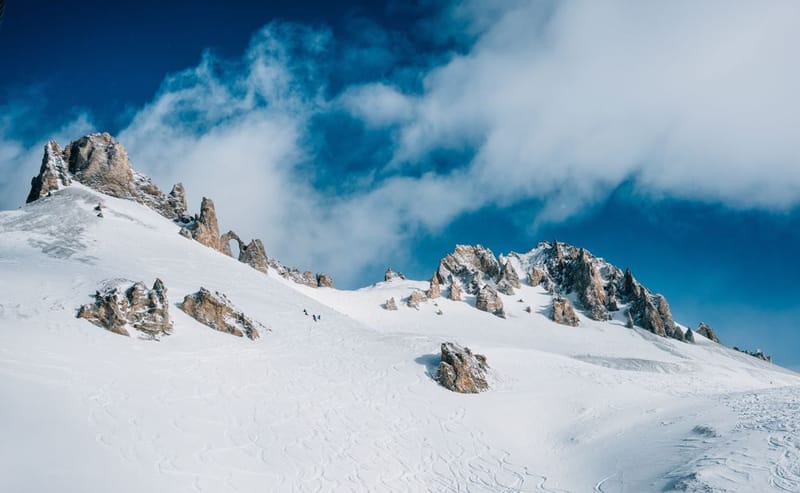
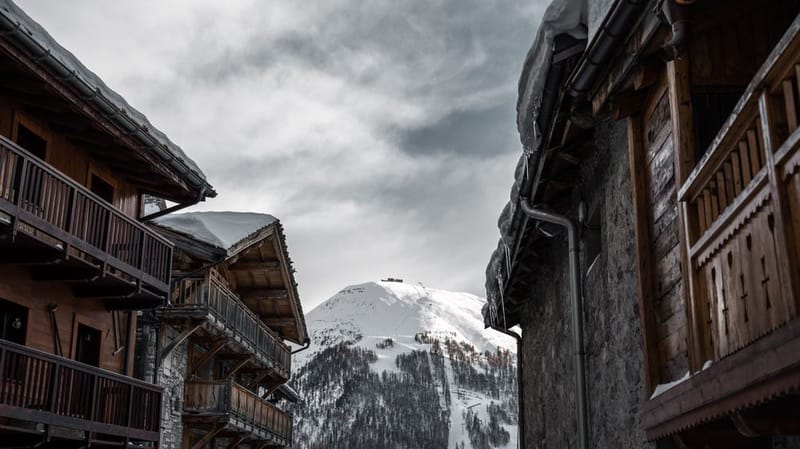
Tignes vs Val d'Isère: Purpose-Built vs Picture-Perfect
Tignes and Val d'Isère share the massive Espace Killy ski area, but that's where the similarities end. These neighbouring resorts have completely different vibes - one's built for efficiency and skiing, the other's a proper Alpine village with centuries of charm. They're linked by lifts, so you can easily sample both during your trip, but where you base yourself makes a real difference to your holiday.
Both resorts sit high in the French Alps with excellent snow records. Tignes tops out at 3,450m whilst Val d'Isère reaches 3,456m, so altitude isn't the deciding factor. With a combined 300km of pistes, you won't run out of terrain in a week. The question is whether you want to wake up in a functional ski station or a chocolate-box mountain town.
The Skiing
The skiing across both resorts is absolutely world-class. Val d'Isère scores marginally higher with our users at 4.6 overall versus Tignes' 4.47, but we're splitting hairs here. One Snomad community member who's an expert skier called Tignes "one of the best ski resorts in Europe" with "fabulous lift accessed off piste when the snow is good". Val d'Isère gets similar praise - James, an advanced skier, said the resort has "incomparable" skiing with "the area massive, the altitude and snow sure slopes excellent".
Both resorts excel for intermediates and advanced skiers. Tignes has 75 runs including 33 intermediates and 20 advanced, whilst Val d'Isère offers 80 runs with similar proportions. The grooming in both is top-notch - Tignes scores 4.61 for groomed runs and Val d'Isère edges ahead at 4.72. Where they differ slightly is off-piste and tree skiing. Val d'Isère gets better marks for tree runs (3.52 vs Tignes' 2.95), which matters if you like ducking into the woods. Charlotte, an intermediate snowboarder, noted that in Tignes "you don't often get those more technical, winding trails through trees".
Lift efficiency is brilliant at both - Tignes scores 4.56 and Val d'Isère 4.68. The majority of users think the lift systems make getting around effortless. Tignes has 40 lifts total (7 gondolas, 21 chairlifts, 12 drags) compared to Val d'Isère's 36 (4 gondolas, 13 chairlifts, 19 drags). Aaron, an advanced snowboarder in Tignes, mentioned "lifts are never too busy and it's easy to find your way around".
For beginners, both work well but with caveats. Val d'Isère has more beginner runs (15 vs Tignes' 6) and scores slightly higher for beginners at 4.49 compared to 4.44. However, Alicia, an intermediate skier in Tignes, warned it's not particularly beginner-friendly as "most green slopes require doing a blue slope first". The free nursery slopes in Val d'Isère give newbies a gentler start.
The Town
This is where the resorts really diverge. Val d'Isère is a proper Alpine village with traditional stone buildings, centuries of history, and that authentic mountain-town atmosphere. It's upscale without being pretentious - though you'll definitely pay for the privilege. Our reviewers mention Val d'Isère feels "designed for people who truly love the mountains" and has "genuine charm". The main street has excellent restaurants, boutique shops, and a lively après scene that transitions smoothly into evening entertainment.
Tignes, on the other hand, is split across four different villages (Val Claret, Le Lac, Les Bossons, and Les Brévières) and was purpose-built for skiing rather than aesthetics. It's functional rather than pretty. David, an intermediate skier, called the resort "tired" and several reviewers mention it's "not as pretty as Val d'Isère". That said, Tom, another intermediate, noted "it's nice, with lots of good food options" even if it lacks a single central hub. The free bus system connects the villages, which some find convenient and others find a bit of a pain.
Après-ski is legendary at both resorts. Val d'Isère scores 4.74 for après whilst Tignes gets 4.54 - both excellent. La Folie Douce is the iconic spot (accessible from both resorts), but Tignes has Cocorico which gets rave reviews. Reece, an intermediate snowboarder, called the "Folie Douce to Bollin then Coco-Rico's Val Claret a top route to finish day of skiing". Val d'Isère has more variety for evening entertainment and late-night options. Chris, an advanced skier, praised Val d'Isère's "lively atmosphere and a real sense of history".
Accommodation options are strong at both - Tignes scores 4.49 and Val d'Isère 4.62. Val d'Isère has more upmarket chalets and hotels, whilst Tignes offers better value with more self-catering apartments. Several Snomad users mention Val d'Isère is expensive but worth it, whereas Tignes is seen as more affordable. Sophia, an expert skier, noted Tignes "attracts a lot of 18-24 year olds" and can feel "quite loud and rowdy", whilst Val d'Isère skews slightly older and more refined.
The Verdict
If you're all about the skiing and want good value without the frills, Tignes is your spot. It's ideal for groups of mates, younger crowds, and anyone who'd rather spend money on lift passes than posh dinners. The skiing is phenomenal, the après is brilliant, and you're paying less for accommodation. Stuart, an expert skier, summed it up perfectly: "more of a skier vibe than influencer. Relaxed and fun, not pretentious."
Val d'Isère suits skiers who want the complete package - incredible terrain plus a beautiful village to come home to. It's worth the extra cost if you care about atmosphere, quality restaurants, and that authentic Alpine experience. Families and couples often prefer it, though it works brilliantly for groups too. One reviewer called it "the GOAT really, cute alpine town and massive resort".
Honestly, you can't go wrong with either. They share the same ski area, so if skiing's your only concern, base yourself in Tignes and save some cash. But if you want to fall in love with the village as much as the slopes, Val d'Isère delivers something special. Many seasoned skiers do a few days in each - the lifts make hopping between them dead easy.
Stats Comparison
| Tignes | Stat | Val d'Isère |
| Ski Terrain | ||
| 6 | Beginner Runs | 15 |
| 33 | Intermediate Runs | 33 |
| 20 | Advanced Runs | 22 |
| 16 | Expert Runs | 10 |
| 75 | Total Runs | 80 |
| 8 km | Longest Run | 10 km |
| 211 km | Skiable Terrain | 89 km |
| 175 kms | Snow making | 80 kms |
| - | Night Skiing | - |
| Elevation | ||
| 3450 m | Top | 3456 m |
| 1550 m | Bottom | 1850 m |
| 1900 m | Vertical Drop | 1606 m |
| Lifts | ||
| 7 | Gondolas / Cable Cars | 4 |
| 21 | Chairlifts | 13 |
| 12 | Surface Lifts | 19 |
| Lift Pass Costs | ||
| €1040 | Season pass | €1040 |
| €396 | 6 days | €336 |
| - | 7 days | - |
| €61 | 1 day | €66 |
| Weather | ||
| 551 cm | Average annual snowfall | 454 cm |
| Community Ratings | ||
| Overall Rating | ||
| Value for Money | ||
| Quiet Slopes | ||
| Après-Ski | ||
| Accommodation Options | ||
| Family Friendliness | ||
| Groomed Runs | ||
| Powder Zones | ||
| Tree Runs | ||
| Mogul Fields | ||
| Off-Piste | ||
| Snow Parks | ||
| Lift Efficiency | ||
| Eating Out | ||
| Ski School Quality | ||
| Beginners | ||
| Intermediates | ||
| Advanced | ||
| Experts | ||
| Snowboarders | ||